
Source: Emarat Al Youm – Dubai
The Dubai Civil Court of First Instance dismissed a lawsuit filed by a woman seeking the return of AED 1,234,559 from her ex-husband, claiming that she had transferred the amount to him over the years of their marriage for investment through a joint bank account, but that he had taken the funds for himself after their separation.
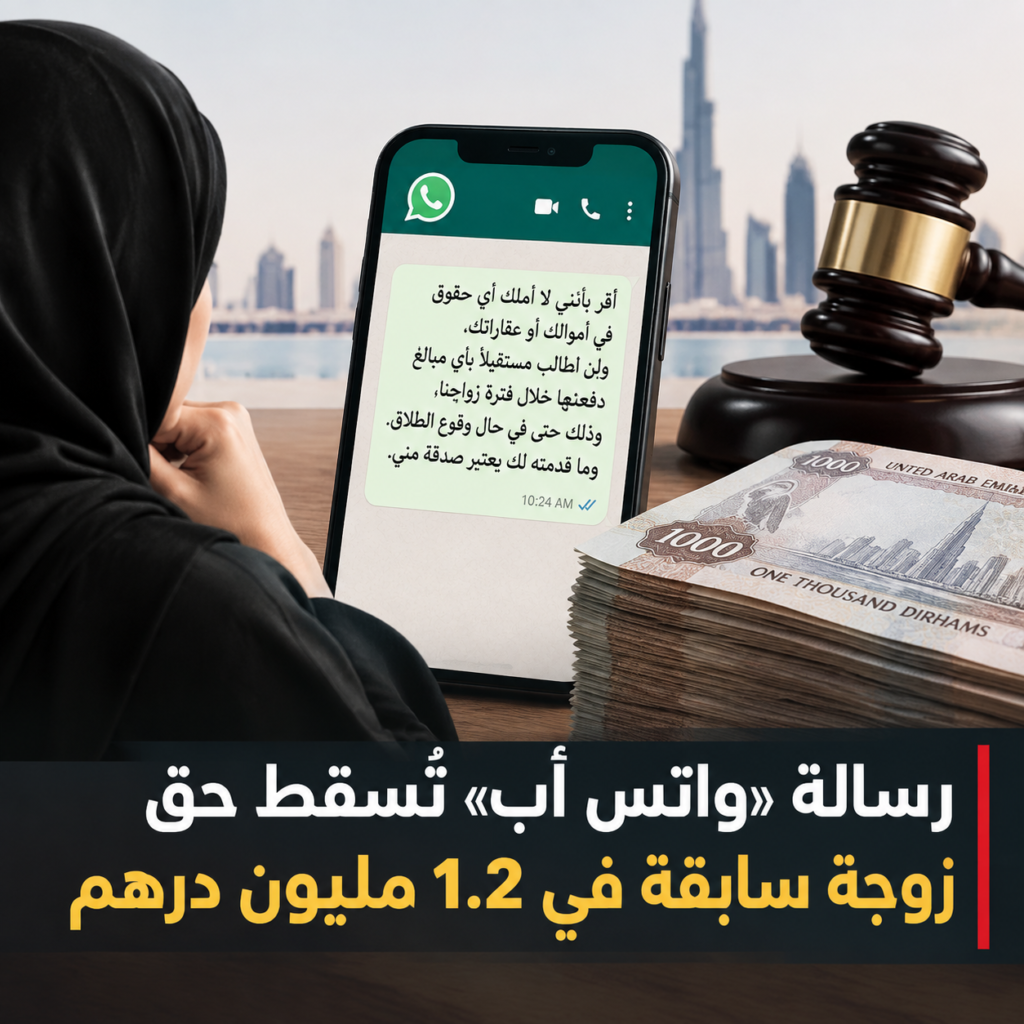
The court based its decision on the fact that the claimant had previously signed, through the WhatsApp application, an acknowledgment containing an explicit waiver of her right to claim these funds, which the court considered legally binding evidence against her.
In detail, the claimant stated in her lawsuit that during the marriage, she and her husband had agreed that part of her salary would be transferred periodically into a joint bank account for investment purposes and to secure the future of their children. She said that the total amount of transfers exceeded AED 1.2 million.
She claimed that her ex-husband had acknowledged this agreement in defense memoranda submitted in a previous legal dispute, admitting the existence of the arrangement and the transfer of the funds. However, she said she was surprised after the divorce when he refused to return her share of the money. According to her claim, she discovered that he had withdrawn amounts from the joint account and transferred them to his personal account, investing the funds for his own benefit without her knowledge. She therefore requested that he be ordered to repay the amount along with legal interest.
The husband, however, maintained his rejection of the claim and submitted documents that he said resolved the dispute. These included a WhatsApp message and an acknowledgment issued by the woman, in which she confirmed that she had no rights in his properties or private funds and that she would not make any future claims regarding the amounts she had contributed during their 12 years of marriage, even in the event of divorce. She described those amounts as a “charitable contribution.”
The court found that the core issue was the legal effect of the claimant’s acknowledgment and whether it constituted a valid waiver of her right to claim those funds.
The court confirmed that the Personal Status Law grants each spouse an independent financial status and allows the wife to freely manage her own money. It also permits a person who contributes to the growth of another person’s assets to seek recovery of their rights. However, the court emphasized that when a waiver of rights is issued clearly and explicitly, it becomes binding on its holder and cannot be withdrawn merely due to a later change of intention.
The court added that the claimant did not deny issuing the acknowledgment or the WhatsApp message attributed to her, nor did she challenge them on any legal grounds. Therefore, they constituted binding evidence against her, especially since the wording of the waiver was clear and left no room for interpretation, expressly covering any claim for money she had paid during the marriage.
The court concluded that the waiver removed the legal basis on which the lawsuit was founded, and accordingly dismissed the claim and ordered the claimant to pay the court fees and expenses.